

The value in vulnerability
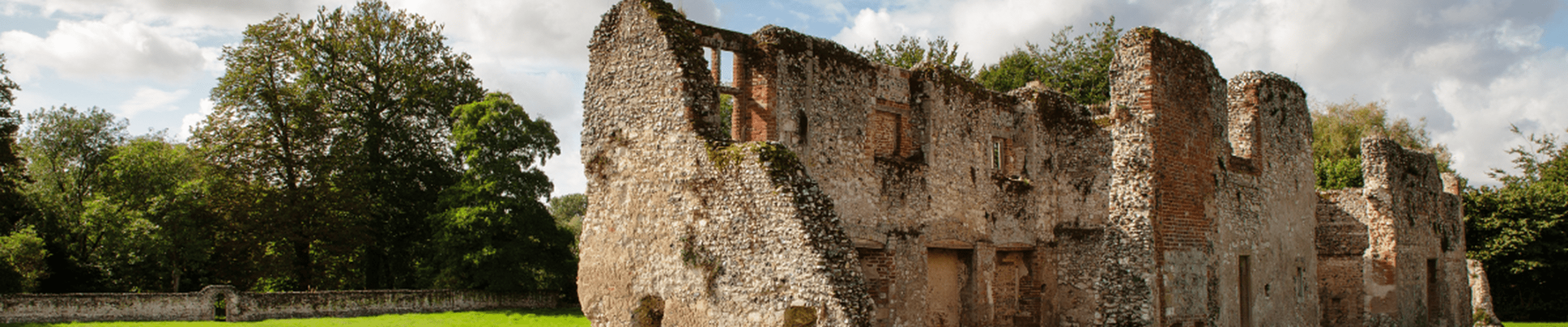
Restoring historic buildings is a development challenge worth embracing, as Carter Jonas client Jennifer Freeman, of Freeman Historic Properties tells Planning & Development InSite.
“Stand in the building and it will tell you what it wants.”
Dr Jennifer Freeman doesn’t say this flippantly. An architectural historian with a postgrad in building conservation, she has spent much of her life surrounded by buildings with stories to tell. Today, she’s one of a small number of people working at the sharpest end of heritage conservation: creating new uses for historic buildings listed as ‘at-risk’.
These are not the chocolate-box conversions of popular imagination. They are often derelict, sometimes structurally unsound, and occasionally verging on ruin. But, as Freeman is keen to demonstrate, with the right expertise and attitude they can be reborn and every challenge overcome.
At St Mary the Less in Thetford, a Grade II* listed church empty for decades and heavily vandalised, she is doing just that. Carter Jonas has been appointed to bring the resulting development opportunity to market: a rare instance of a historic church being sensitively reimagined as five modern homes.
“There’s some perception that listed buildings are too complicated or too constrained to work with,” Freeman says. “But, in fact, listed status can unlock grant funding, it encourages a higher standard of design, and crucially, it ensures that the most significant facets of the building are properly understood and protected.”
A life in conservation
Few people are better placed to make that argument. Dr Freeman is a former Secretary of the Victorian Society and former Director of the Historic Chapels Trust. She has served on the Council for the Care of Churches and sits on the Fabric Committee of St Paul’s Cathedral on Historic England's London committee. Her honours – OBE, Fellow of the Society of Antiquaries, and many others – reflect a long-standing and scholarly dedication to preserving the nation’s architectural heritage.
But preservation, as she sees it, is not about freezing buildings in time: “The priority is for these buildings to be part of people’s lives again. Not museums or relics, but real places that people can live in or work in.”
Freeman’s previous projects include the conversion of the grandstand at the Burghley House estate into housing, and the transformation of an early Georgian orangery in Eltham into offices. Every scheme that she has worked on has involved navigating the regulatory and practical complexity of listed buildings, while finding new long-term uses.
Balancing risk and reward
The St Mary the Less project follows the same logic. After acquiring the building, Freeman secured a grant from Historic England and worked with the not-for-profit, conservation-accredited architects Matter of Place to explore how the fabric could be retained while making the site liveable. Planning consent was granted in 2024. The resulting scheme is now being offered as a development opportunity through Carter Jonas.
Dominic Bryant, Head of Development (Eastern Region) at Carter Jonas, says that the huge potential attached to the scheme is a testament to Freeman’s unique understanding and persistence: “This was not a straightforward site, and many might not have given it a second glance. But Jennifer has considerable heritage expertise and a clear commercial instinct. She knows how to build the right team, progress through what can be a challenging and adversarial planning system, and take decisions that are both respectful and practical.”
The team behind St Mary the Less included engineers, conservation architects and heritage consultants, all of whom worked together to ensure the scheme met the demands of Building Regulations and Historic England, without compromising the character of the building.
“There are always technical issues,” Freeman says. “Potentially damp, subsidence, unsafe structures. And there is increasing regulation – such as bat and wildlife surveys – which can take considerable time and money.”
But encouragingly, there are fewer hurdles than people assume. “People are often surprised that there’s no local opposition. In fact, local residents and historic societies are usually very pleased that someone is taking an interest in what is otherwise a redundant building. At Thetford, we’ve had nothing but encouragement.”
A different kind of developer
If Freeman’s approach sounds idealistic, it is also underpinned by a clear business case. As Jason Capel, Head of New Homes at Carter Jonas, explains, “There is a strong appetite among buyers for homes with character and individuality, especially when they are close to town centres. A sensitively converted church like this offers something that’s increasingly rare and very much sought-after.”
The market recognises this, he says, and with the growing pressure on developers to differentiate their offer, heritage-led schemes can provide a real commercial edge.
“Conversions are not for everyone,” Freeman acknowledges. “Developers need the right mindset and need to listen to the building. You can’t impose a modern layout and expect it to work. You have to stand in the building and let it suggest the answer.”
A call for greater involvement
Freeman sees a need for more people to step forward to avoid more ‘at-risk’ properties being lost.
“It’s a pity that more people don’t get involved. There are so many buildings on Historic England’s At-Risk register that could be transformed. But people assume you need to be an expert. You don’t. You need to work with experts – that’s not the same thing. If you can find a conservation-accredited architect and you’re willing to listen, you can turn a dying building around.”
The potential pipeline is certainly there. Historic England publishes the Heritage at Risk register each year. In 2024, this included no fewer than 969 places of worship, along with 1,442 other buildings and structures. While large-scale preservation trusts take on the occasional project, the majority of opportunities go unclaimed.
For Freeman, the key is to identify buildings with the right balance of architectural significance and reuse potential. “Not everything can be saved. But there are so many that could be, with the right team and a bit of courage.”
Rethinking the role of planning and development
It’s here that planners, policymakers and developers could play a bigger role. The planning system already supports heritage-led regeneration – through Section 16 of the NPPF and local policy frameworks – but delivery depends on individuals willing to take the leap.
As St Mary the Less shows, that leap can pay off: rescuing a building, creating homes and creating value.
It is a view that chimes with Carter Jonas’ own philosophy. As Bryant puts it: “At its best, development is about making places work for people. There’s no better example of that than taking a near-ruin and making it part of the community again.”